Question 1: What is this series?
Each book takes one corner of pop culture and works through it in order. Not the questions you can guess, but the ones where the answer turns out better than expected: the detail behind the detail, the thing the documentary left out.
The books so far
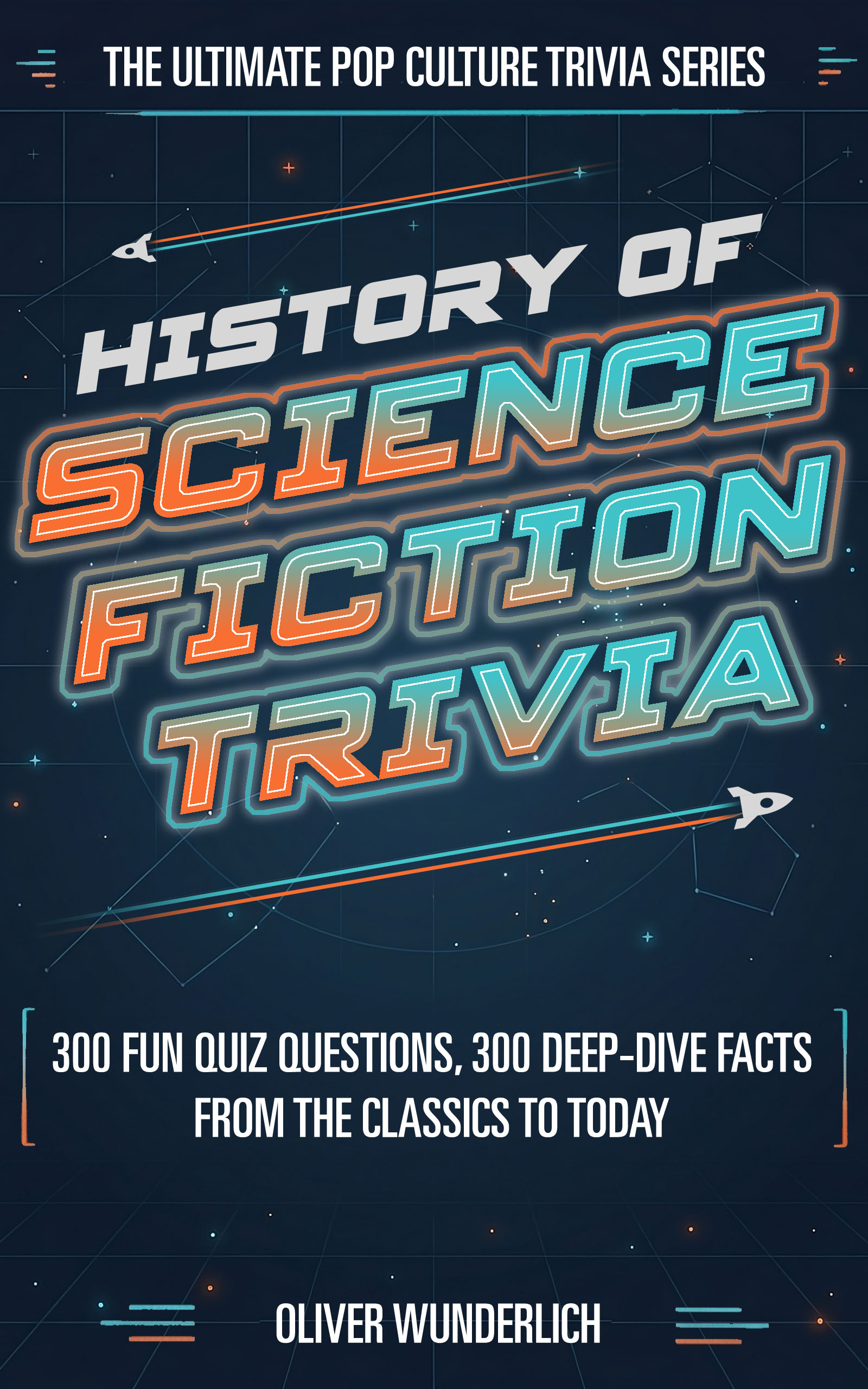
History of Science Fiction Trivia
From the classics to now
You know what a tribble is and why HAL won’t open the pod bay doors. But do you know why Tom Baker’s scarf got that long, or that the genre reached the Moon three centuries before NASA, pulled by geese? Ten rounds from the pulps to the streaming era.
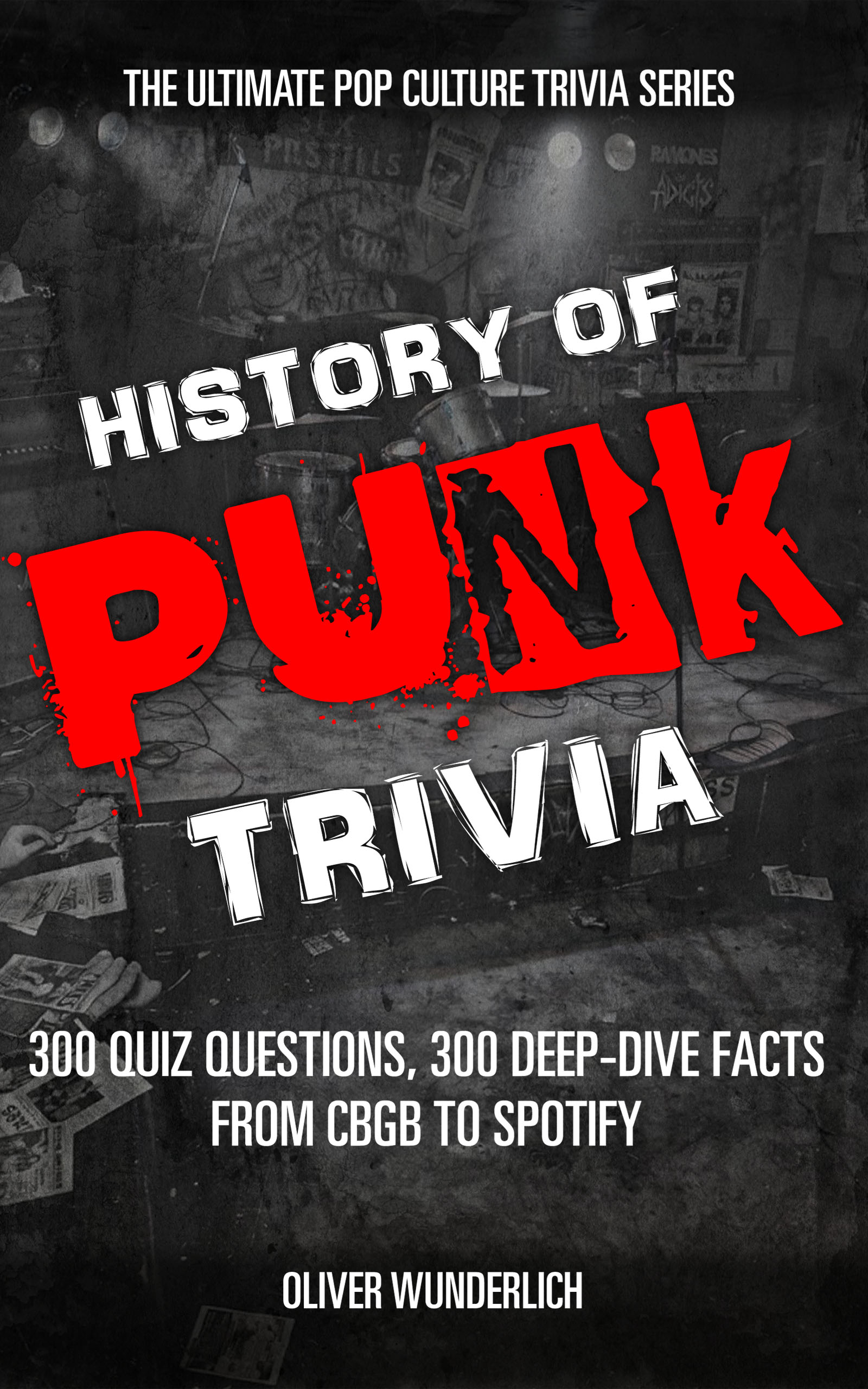
History of Punk Trivia
From CBGB to Spotify
CBGB, 1975: a bar with a broken toilet and a house band nobody had heard of. Fifty years later punk is a Grammy category. Ten rounds from the Bowery to Bandcamp, multiple choice, no mercy, and finally a way to test the friend who claims he was there.
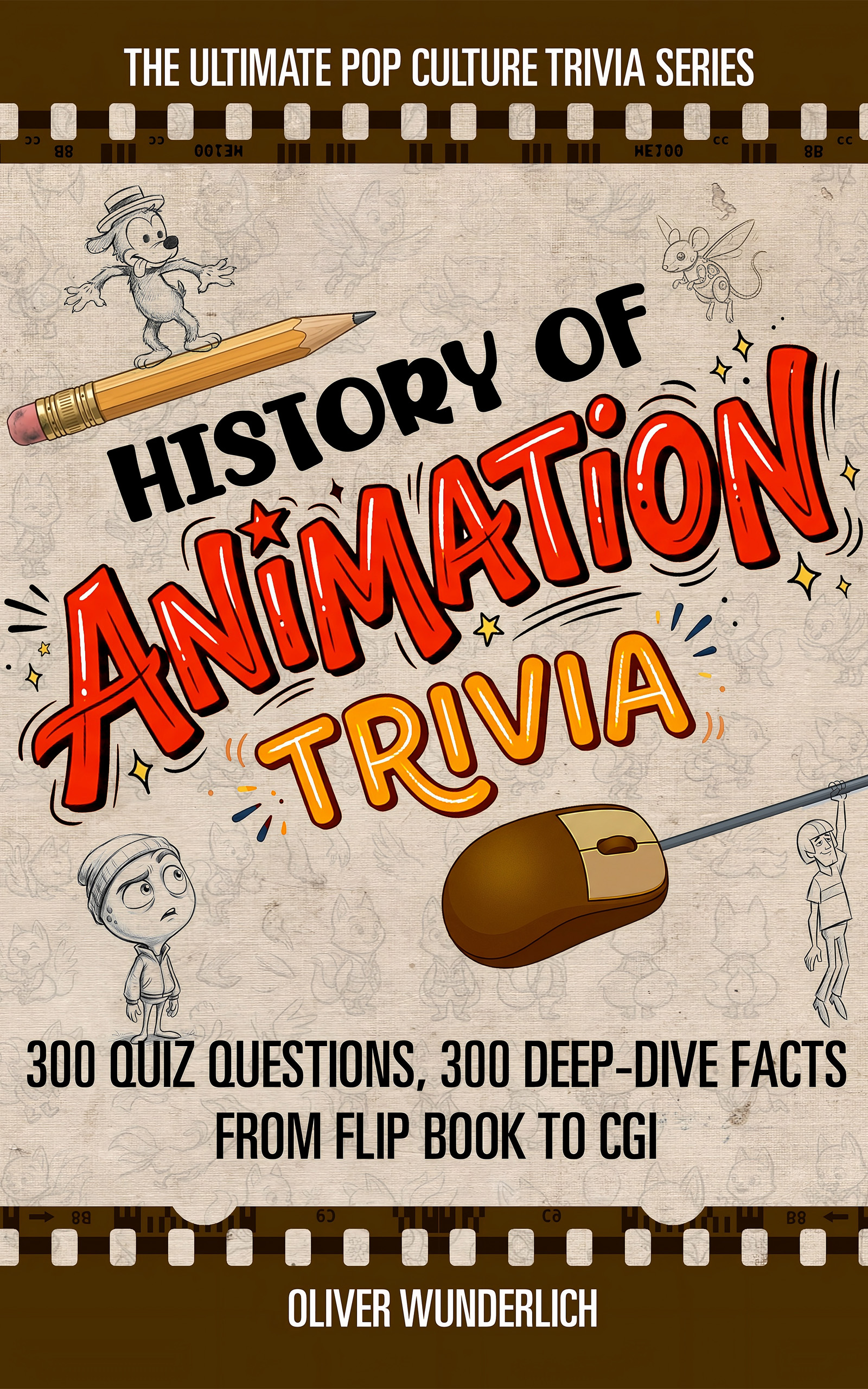
History of Animation Trivia
From flip book to CGI
In 1914 a man on a vaudeville stage told a drawn dinosaur to take a bow, and she did. A century later a girl group made of pixels tops the charts. In between: the mouse, Saturday mornings, anime, the Disney Renaissance and the pixel revolution, in ten rounds.
How the books work
- Ten rounds per book, thirty questions per round, in chronological order. Each book doubles as a crash course in its subject.
- Every question has four options, and exactly one of them is right.
- Every answer comes with a fact you didn’t ask for. That’s the part you’ll repeat at dinner.
Play it against someone. Take it to a quiz night. Or work through it alone and lie about your score.
Try a few
Five questions from each book. Think of an answer, then check it. No points, no prizes, and nobody is judging if you peek.
Science fiction: five questions
Fritz Lang’s Frau im Mond (1929) sent a crew to the Moon, with advice from a real rocket pioneer. Which now-universal launch ritual did the film popularise?
Show answer
D) The countdown to zero. Lang invented it purely for suspense, with rocket pioneer Hermann Oberth advising on the film.
Karel Čapek’s play R.U.R. (1920) gave the world the word “robot”. What does the Czech word it comes from mean?
Show answer
B) “Forced labour”. Čapek credited his brother Josef with the word; his own suggestion had been “labori”, which would have made Star Wars a rather different film.
In Close Encounters of the Third Kind (1977), humans greet the visitors with a short musical phrase. How many notes does it have?
Show answer
D) Five. John Williams reportedly worked through hundreds of variations before landing on the five-note phrase.
In the film Logan’s Run (1976), life in the domed city ends at a fixed age. At what age are citizens required to report for “renewal”?
Show answer
C) 30. In the novel the deadline is 21; the studio raised it to 30, reportedly because it is difficult to cast a leading man who looks 20.
Michael Crichton’s Westworld (1973) is a theme park full of androids that are perfectly safe. Which actor played the relentless robot Gunslinger?
Show answer
B) Yul Brynner. Brynner’s costume deliberately echoed his gunslinger from The Magnificent Seven, making him arguably the first actor to play a robot version of himself.
Punk: five questions
The Kingsmen’s 1963 version of “Louie Louie” became the most misunderstood record in America. Who wrote the song?
Show answer
A) Richard Berry. The FBI investigated the Kingsmen recording for obscenity for over two years and finally concluded that the lyrics were unintelligible at any speed.
At the 1970 Cincinnati Pop Festival, Iggy Pop walked out across the hands of the audience. What did he smear on himself?
Show answer
D) Peanut butter. The whole thing went out on national television, which means a generation of American teenagers watched it in the afternoon by accident.
Three brothers from Detroit played loud, fast rock in the early 1970s and were told their band name was unmarketable. Which band was it?
Show answer
A) Death. The Hackney brothers were reportedly offered a record deal on the condition that they pick a cheerier name, and they declined. Their tapes surfaced in 2009.
The letters on the awning at 315 Bowery were chosen in 1973, long before punk moved in. What did CBGB OMFUG stand for?
Show answer
C) Country Bluegrass Blues and Other Music for Uplifting Gormandizers. A gormandizer is a voracious eater, in this case of music rather than of the bar snacks, which was probably for the best.
Four unrelated men from Queens all used the same surname. Whose pseudonym gave the Ramones their name?
Show answer
C) Paul McCartney, who toured as Paul Ramon. McCartney used the name with the Silver Beetles in 1960 because he thought it sounded exotic; years later it was stencilled on four leather jackets in Queens.
Animation: five questions
Winsor McCay performed Gertie the Dinosaur (1914) live on stage, giving the drawing commands with a whip. What did he do at the grand finale?
Show answer
A) He stepped behind the screen and reappeared in the cartoon, riding off on Gertie. This seamless switch between stage and screen was interactive entertainment a century before anyone said “multimedia”.
Colonel Heeza Liar, one of the first regular cartoon series, is about a boastful old adventurer telling tall tales. Which real-life figure was he a parody of?
Show answer
C) Theodore Roosevelt. The real Roosevelt had just returned from a much-publicised African safari, which gave the boastful Colonel plenty of material.
From 1959, a little green steam engine puffed through the hills of Wales in Oliver Postgate and Peter Firmin’s cut-out animation. What is Ivor the Engine’s greatest wish?
Show answer
B) To sing in the local choir. Ivor’s railway has a wonderfully Welsh name: the Merioneth and Llantisilly Rail Traction Company Limited.
Toy Story’s space ranger had a completely different name in early drafts. After whom was Buzz Lightyear named?
Show answer
B) The astronaut Buzz Aldrin. In early drafts he was called “Lunar Larry”, which would have made “To infinity and beyond!” sound considerably less heroic.
In Neon Genesis Evangelion (1995), a 14-year-old pilots a giant bio-machine to defend Tokyo-3. What are the mysterious attackers called?
Show answer
A) Angels. The controversial ending of the TV series led to the cinema film The End of Evangelion (1997), which retold the finale in a very different way.
Get in touch
Spotted a mistake? Know a better fact? Want to settle which Trek captain was the best? Write to hsft@oliverwunderlich.de.
Coming next
Twelve more corners of pop culture are on the list. No release dates yet. The rabbit holes are deep.
- Sitcoms
- Stand-Up
- Musicals
- Video Games
- Comic Books
- TV Detectives
- Fantasy
- Britpop
- TV Comedy
- Rom-Coms
- Pop Philosophy
- Puppets